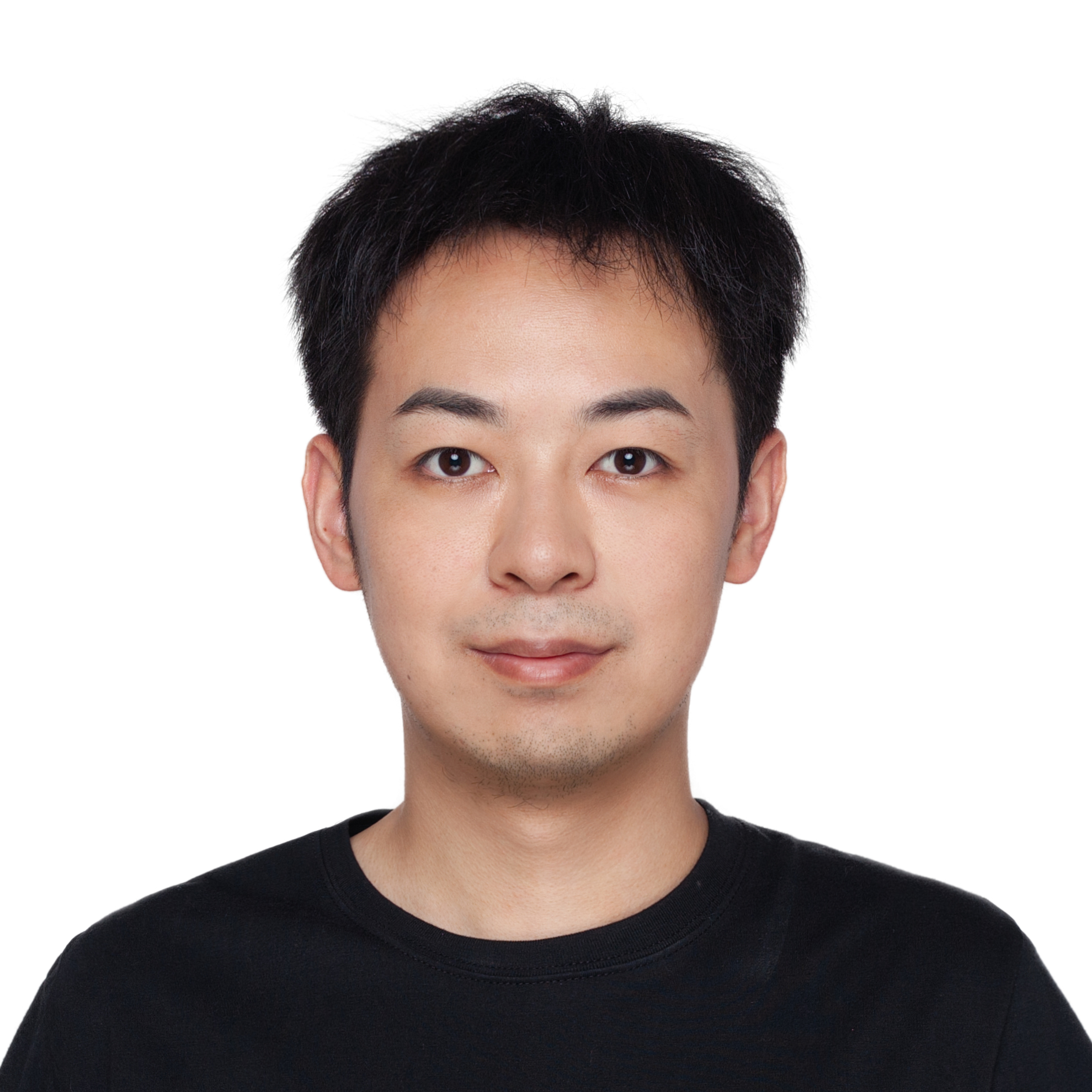
Yue Wang (汪越)
- I am currently an assistant professor in the Department of Biostatistics & Informatics and the Center for Innovative Design and Analysis at the University of Colorado Anschutz Medical Campus. I am also a Full Member of the Cancer Prevention and Control Program at the University of Colorado Cancer Center.
- My research program develops statistical and computational frameworks for systems biology that uncover these interactions and translate high-dimensional multi-omics data into biologically and clinically meaningful insights.
- Prior to joining CU Anschutz, I was an assistant professor at Arizona State University. I worked as a post-doctoral fellow at the University of Washington with Prof. Ali Shojaie and at the Fred Hutchinson Cancer Center with Prof. Jing Ma. I also collaborate closely with Dr. Tim Randolph’s lab at Fred Hutch. I earned my Ph.D. in Biostatistics from the University of North Carolina at Chapel Hill and my bachelor’s degree in Statistics from the University of Science and Technology of China.
Recent News
- Nov, 2026. We propose RoDPAA for multiview microbiome data integration, which respects the natural geometry of each view, requires few modeling choices, and defines sharing flexibly. Check out the preprint.
- Nov, 2026. Jinal will be presenting our Spatial-GMD work, which aims to improve the robustness of spatially variable gene analysis in spatial transcriptomics studies, at the CU Anschutz Cancer Center Scientific Retreat!
- Nov, 2026. Our MMDP is published in Bioinformatics. MMDP is a statistical method for constructing microbiome-metabolome-disease pathways by integrating complementary data sets.
- Sep, 2026. Bernardo Flores (Ph.D. in Statistics, UT Austin) is joining our lab as a postdoctoral fellow! Welcome to the team, Bernardo!
- July, 2026. We developed a robust compositional-aware method for microbiome correlation estimation. Check it out!
- July, 2026. We have a new paper published in Statistics in Medicine on Distance regression for longitudinal and cross-over microbiome data.
- May, 2026. We have a new preprint on robust DAG estimation through model averaging.
- May, 2026. I will join Biometrics as an Associate Editor in July, 2026.
- Apr, 2026. I am honored to join the University of Colorado Cancer Center as a Full Member.
- Nov, 2025. I start to serve as a Guest Editor for PLOS Computational Biology.
- Sep, 2025. I am excited to start working on a new NIH R35 MIRA grant titled Robust Multivariate Methods for Analyzing Pathway Interactions and Pathway-Phenotype Associations in Bulk and Single-Cell RNA-seq Studies.
- Sep, 2025. I just published a review paper in WIREs Computational Statistics on dimensionality reduction for structured biomedical data — check it out!
- July, 2025. Our CoMMiT paper is online! CoMMiT is a novel within-cohort transfer-learning method designed to minimize negative transfer in microbiome studies. Check it out!
- June, 2025. I received an NIH R03 award to study microbiome-metabolome interactions in IBD populations.
- Apr, 2025. We propose microbial correlation to study microbial co-metabolism.
- Jan, 2025. We have a new paper accepted by Statistica Sinica! RAPLS is an extension of partial least squares to generalized functional linear models.
- Nov, 2024. We have a new paper accepted by Bioinformatics! This is joint work with Ph.D. student Ruoqian Liu and Prof. Dan Cheng from ASU. Micro-DeMix is the first method to investigate the spatial compositions of fecal microbiomes.
- Aug, 2024. Our highcor paper is online!
- July, 2024. We have a new paper accepted by Biostatistics! This is joint work with Ph.D. student Haoran Shi. Check out this preprint and our R package highcor.
- Feb, 2024. We have proposed an integrative framework to elucidate microbiome-metabolome-disease pathways. Check out our preprint.
- Jan, 2024. We have developed smoothing spline methods to model the temporal dynamics of single-cell RNA-seq data. Check out our preprint.
Talks
- June, 2024. I gave a talk on pathway similarities at ICSA, Wuhan, 2024.
- June, 2024. I gave a talk on pathway similarities at WNAR, Fort Collins, 2024.